

ArticleProof coins
How Great Engravers revived a two hundred year old die
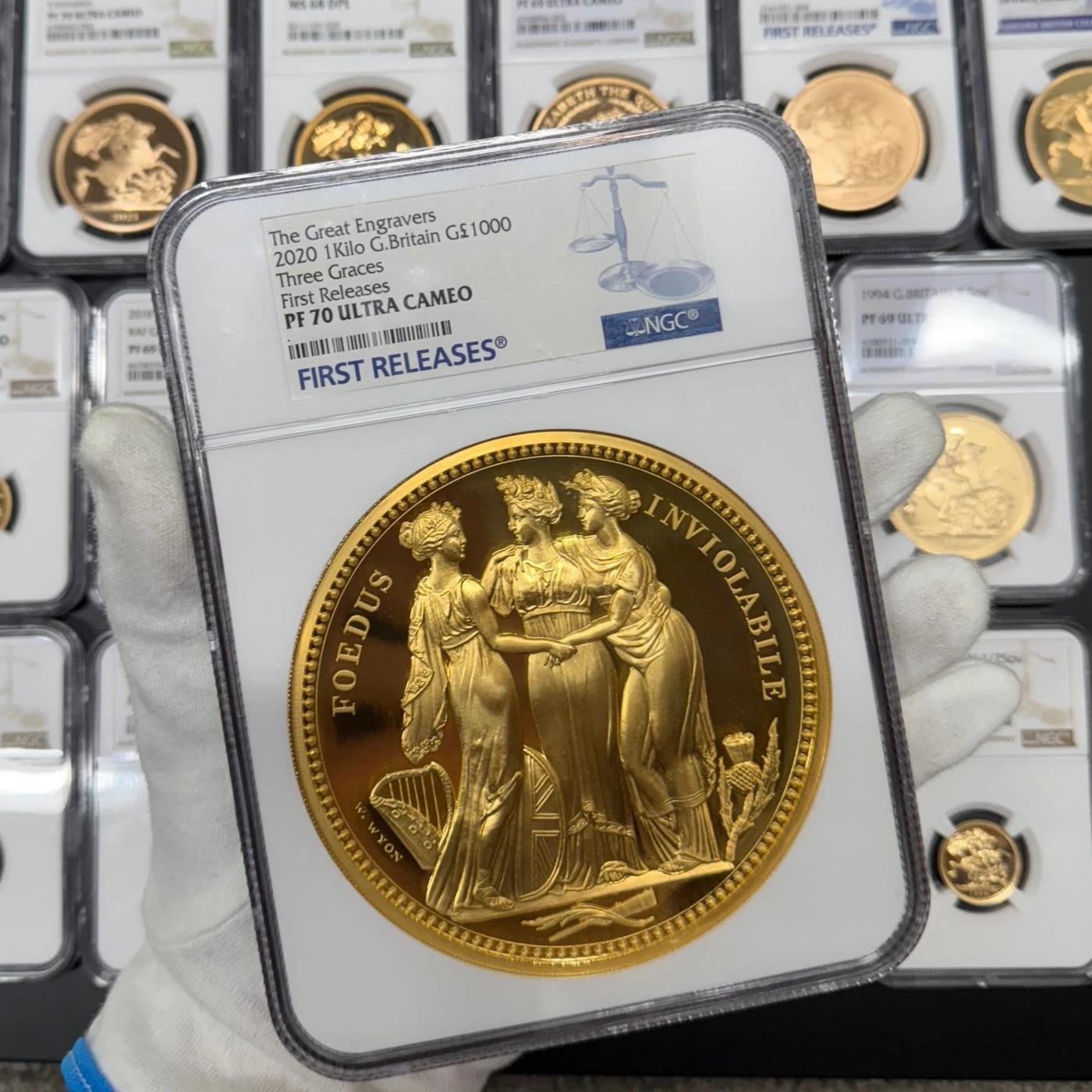
The Three Graces sold out in hours. The reason has as much to do with 1817 as with 2020.
4 min readRead
Independently graded · Free insured delivery over £1,000
The library
Grading, proof strikes, mint marks, premiums and tax, written plainly by people who handle the coins. Nothing here is a recommendation to buy.
Start here
What NGC and PCGS actually assess, how the seventy point scale works, and why a sealed holder changes how a coin trades.
If you read one thing before spending money on a coin, make it this. Almost every other question, from premiums to resale, comes back to what the number on the holder means.
70PF
Flawless proof at 5x magnification
69PF
One or two microscopic flaws
70MS
Flawless bullion or business strike
64MS
Uncirculated, light contact marks
Grades describe condition, not worth.
Browse
Search by keyword or narrow it to a topic. Guides are the long reference pieces; articles are shorter notes from the desk.
Showing 8 of 8 pieces
ArticleProof coins
The Three Graces sold out in hours. The reason has as much to do with 1817 as with 2020.
The whole library
GuideGrading
What NGC and PCGS actually assess, how the seventy point scale works, and why a sealed holder changes how a coin trades.
GuideMarket
Spot, premium and the price on the label. How the London market is structured and how UK coins are treated for VAT and CGT.
GuideRoyal Mint
Eight hundred years from Henry III's gold penny to the modern Britannia, and the Royal Mint that struck most of it.
ArticleProof coins
Proof is not a grade and not a quality claim. It describes how the coin was made, and the process explains almost everything else about it.
ArticleSovereigns
Mintage is how many were struck. How many survive at the top grade is a different and far smaller number, and that gap is where collectors live.
ArticleRoyal Mint
British coinage has been struck in three homes across eleven hundred years. Where a coin was made is part of what it is.
ArticleSovereigns
A single letter on the ground line beneath Saint George tells you which side of the world your sovereign came from.
ArticleGrading
First Release, Ultra Cameo, signed labels. A quick translation of the words printed alongside the grade.
Common questions
If yours is not here, ring the desk on 0204 587 1838 and ask a person.
An independent service, almost always NGC or PCGS, examines the coin for condition, strike quality and authenticity, assigns a number on a seventy point scale and seals it in a tamper evident holder. The grade travels with the coin, so a buyer does not have to take the seller's word for its condition.
Proof describes how the coin was struck, not how good it is. Polished dies and more than one strike — at lower speed and less pressure than a bullion coin, to preserve the fine detail — produce the sharper relief and the mirrored field you see behind a frosted design. Proof runs are far smaller than bullion runs, and the coins are handled individually at the mint.
It usually trades at a premium, because PF70 is the top grade awarded and the population in it is smaller. In the hand the two are normally indistinguishable, since the flaws separating them are microscopic. Whether the premium is worth paying is a collecting decision rather than a grading one.
Investment grade gold is exempt from VAT, and UK legal tender coins such as sovereigns and Britannias are exempt from Capital Gains Tax for UK residents because they are legal tender. This reflects current legislation and is not tax advice; your own position may differ.
Almost never. The holder protects the surface, carries the grade and removes the counterfeit question. Once it is opened the coin has to be resubmitted to be graded again, and there is no guarantee it comes back at the same number.
Every graded coin we list shows its certification number on the product page. Enter it into the verification page on the NGC or PCGS website and you will see the same coin, the same grade and the same holder. We would rather you checked.
Keep reading
A short note when something new goes up, alongside anything genuinely interesting that lands in the vault. No sales pressure.
We never share your details. Unsubscribe in one click.